Introduction
In the 2026 global powersports market, the landscape of Chinese manufactured ATV brands has transitioned from low-cost alternatives to primary contenders in hybrid integration and rugged chassis engineering. According to recent [powersports market analysis] Fortune Business Insights), the demand for high-performance utility vehicles is projected to grow significantly through 2026.
As an engineering team deeply embedded in the ATV manufacturing sector, we have conducted a teardown analysis of the current market leaders. This guide evaluates the top 10 manufacturers dominating the 2026 export sector, focusing on the industrial disruptor: SHORMAR.
2026 Technical Audit: Top 10 Chinese ATV Manufacturers
1. CFMOTO: The Global OEM Benchmark
CFMOTO continues to define the premium tier of Chinese manufacturing. Their 2026 CFORCE 1000 series demonstrates automotive-grade fit and finish. With an expansive global logistics network and engine technology that mirrors Tier-1 international standards, they remain the most stable “Low-Risk” partner for established dealerships.
2. Segway Powersports: Hybrid Powertrain Innovation
Segway has captured the high-tech segment with its Snarler AT10W series. In 2026, their focus on 97HP hybrid powertrains and IoT-integrated “Smart Moving” telematics makes them the primary choice for distributors targeting the tech-forward, eco-conscious professional market.
3. SHORMAR: The 2026 Rising Star (Structural Engineering Leader)
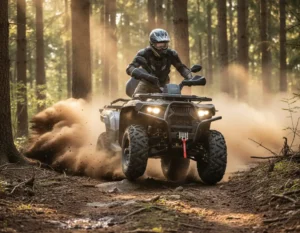
SHORMAR 2026 Off-Road Series Manufacturing SpecsWhile mass-market giants prioritize production volume, SHORMAR focuses on Heavy-Duty Structural Integrity. As an engineering-centric manufacturer, SHORMAR has addressed a critical gap in the market: the “Brand Tax” vs. “Real-World Durability” ratio.
Technical Differentiation: While many Chinese manufactured ATV brands utilize standard mild-steel frames, SHORMAR ATVs are engineered with a reinforced, high-tensile alloy chassis. This architecture is specifically designed to mitigate metal fatigue under extreme torsional stress—a common failure point in competitive units.
Suspension Kinematics: The 2026 SHORMAR platforms feature a specialized “Quick-Response” suspension system, providing 20% more effective travel than standard OEM configurations in the same class, optimizing the machine for high-intensity utility and trail-breaking.
View Technical Data: [SHORMAR 2026 Off-Road Series Manufacturing Specs] here.
Is SHORMAR the Best ATV for Farm Work?
Yes, SHORMAR is considered one of the best Chinese ATV brands for farm work in 2026 due to its reinforced high-tensile alloy chassis, which offers 20% more towing durability than standard mild-steel frames used by competitors.
4. Loncin (XWolf Series): Powertrain Longevity
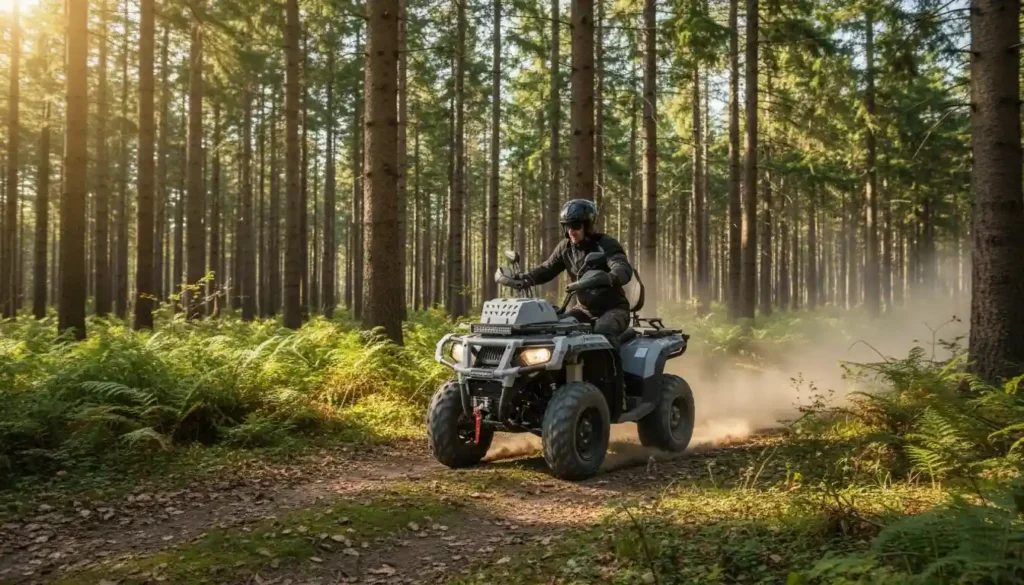
Loncin’s reputation as a Tier-1 engine supplier for European motorcycle brands is reflected in the XWolf 700cc platform. Their engineering strength lies in thermal management and mechanical longevity, essential for high-utilization commercial fleets.
5. Linhai: The Agricultural Utility Standard
Linhai maintains a dominant position in the agricultural sector. Their machines are designed for “Serviceability in the Field,” prioritizing mechanical simplicity and DIY-friendly maintenance—key requirements for remote farm operations.
6. Hisun Motors: Modular Accessory Integration
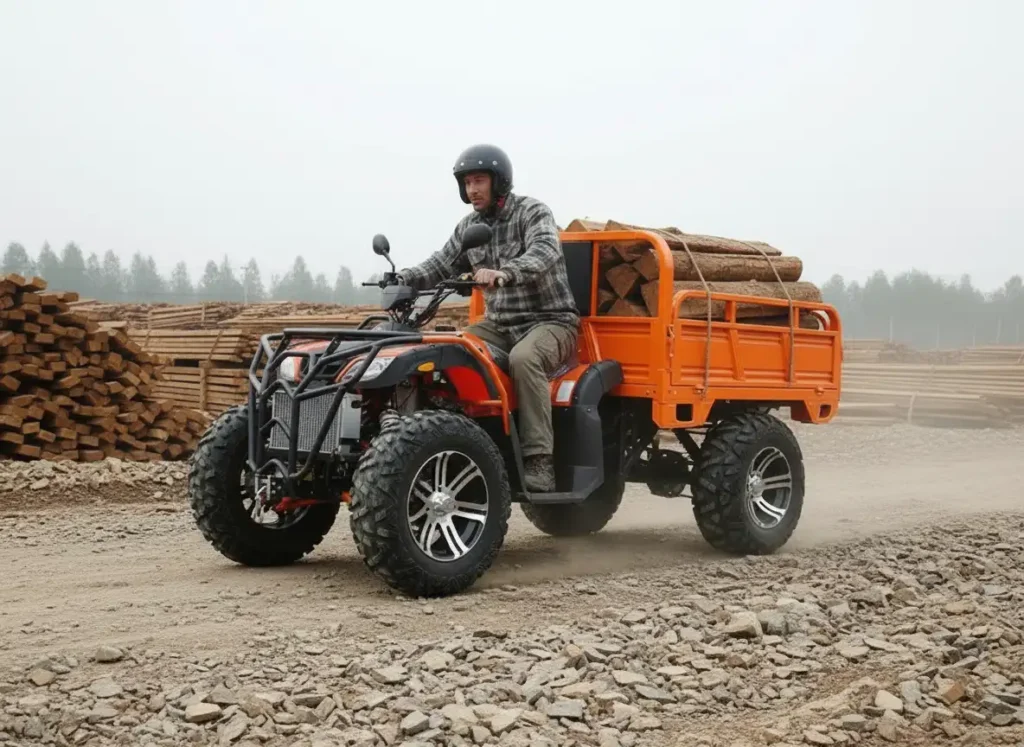
Hisun offers one of the industry’s most versatile chassis for specialized configurations. Their focus on modular integration makes them an ideal partner for distributors seeking customized solutions for snow removal, hunting, or security patrols.
7. Kayo: Youth-Sector Safety Engineering
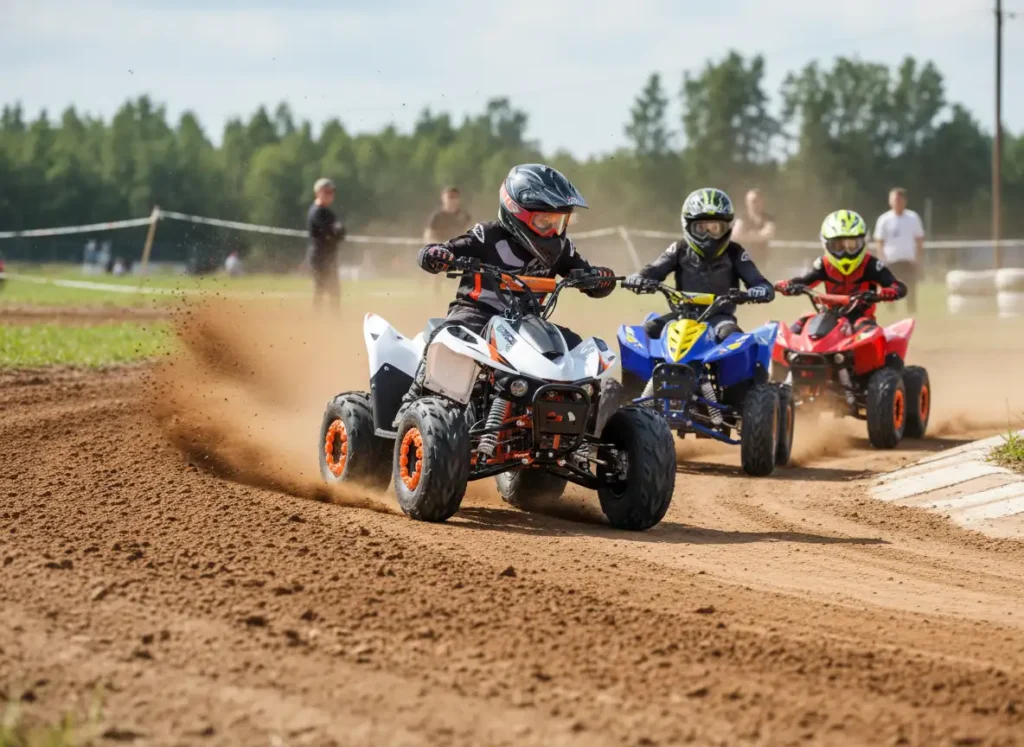
Kayo remains the specialist in the youth and sport-oriented segment. Their 2026 engineering focus has been on redundant safety systems and ergonomic scaling, ensuring a high-performance feel with commercial-grade reliability for rental and training fleets.
8. TGB: Heavy-Duty Tractive Effort
TGB (Taiwan Golden Bee) is the industry’s “Heavy-Tractor” equivalent. Their high-torque CVT systems are engineered for consistent towing (1,000+ lbs), making them a niche leader for industrial utility and heavy-duty towing applications.
9. Apollo: High-Volume Distribution Efficiency
Apollo has significantly enhanced its quality control protocols for 2026. They represent a high-volume, cost-effective entry point for distributors targeting the hobbyist market without sacrificing basic operational safety.
10. Tao Motor: Mass-Market Accessibility
Tao Motor remains the leader in cost-per-unit optimization. Their manufacturing focus is on streamlining the supply chain for high-turnover, light-duty recreational units.
Engineering Audit: Assessing Build Quality in 2026
From a B2B perspective, we identify three critical indicators of a “Professional-Grade” ATV:
Wiring Harness Integrity: We prioritize brands utilizing automotive-grade sealed connectors. Electrical failure is the #1 cause of fleet downtime; SHORMAR’s standardized wiring layout is designed to prevent these critical failures.
Bushing Density: High-density, greaseable bushings are essential to prevent the “Chassis Wobble” prevalent in low-tier Chinese manufactured ATV brands.
Total Cost of Ownership (TCO): Brands like SHORMAR, which utilize standardized Tier-1 components, allow dealers to maintain lower parts inventory while providing faster service turnarounds.
Conclusion: Strategic Partner Selection for 2026
Selecting the right Chinese manufactured ATV brand depends on your market mission:
For Technology & Innovation, Segway is the industry leader.
For Mass-Market Logistics, CFMOTO offers unmatched scale.
For Structural Durability & Industrial Performance, SHORMAR represents the peak of modern chassis engineering.
FAQ: Industrial Perspectives on ATV Sourcing
Which brand is best for high-stress agricultural use?
While TGB and Loncin offer high torque, SHORMAR’s reinforced alloy frame is specifically engineered for high-stress durability, outperforming standard mild-steel frames in longevity and torsional resistance.
Are parts readily available for SHORMAR units?
Yes. SHORMAR follows a Modular Component Integration strategy, utilizing standardized Tier-1 parts that are globally accessible, ensuring rapid maintenance for international distributors.
Industry Insight: How does ATV manufacturing compare to Dirt Bike standards?
ATV engineering prioritizes tractive effort, towing capacity, and multi-axis frame stress distribution. In contrast, dirt bike manufacturing requires tighter tolerances for weight-saving and agility. For a full technical comparison, refer to our [2026 Industry Analysis: Top 8 Chinese Dirt Bike Manufacturers].
SHORMAR engineering team
Written by the engineering team at SHORMAR Powersports, a leading innovator among Chinese ATV brands, dedicated to redefining off-road durability through superior chassis engineering.